Bali, Indonesia, 12 June 2026 — The Social Media Animal Cruelty Coalition (SMACC), a program of the Asia for Animals Coalition, together with co-host Sintesia Animalia Indonesia, has concluded the world’s first international summit dedicated exclusively to addressing online animal cruelty.
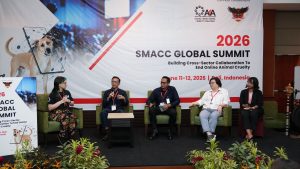
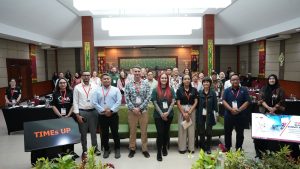
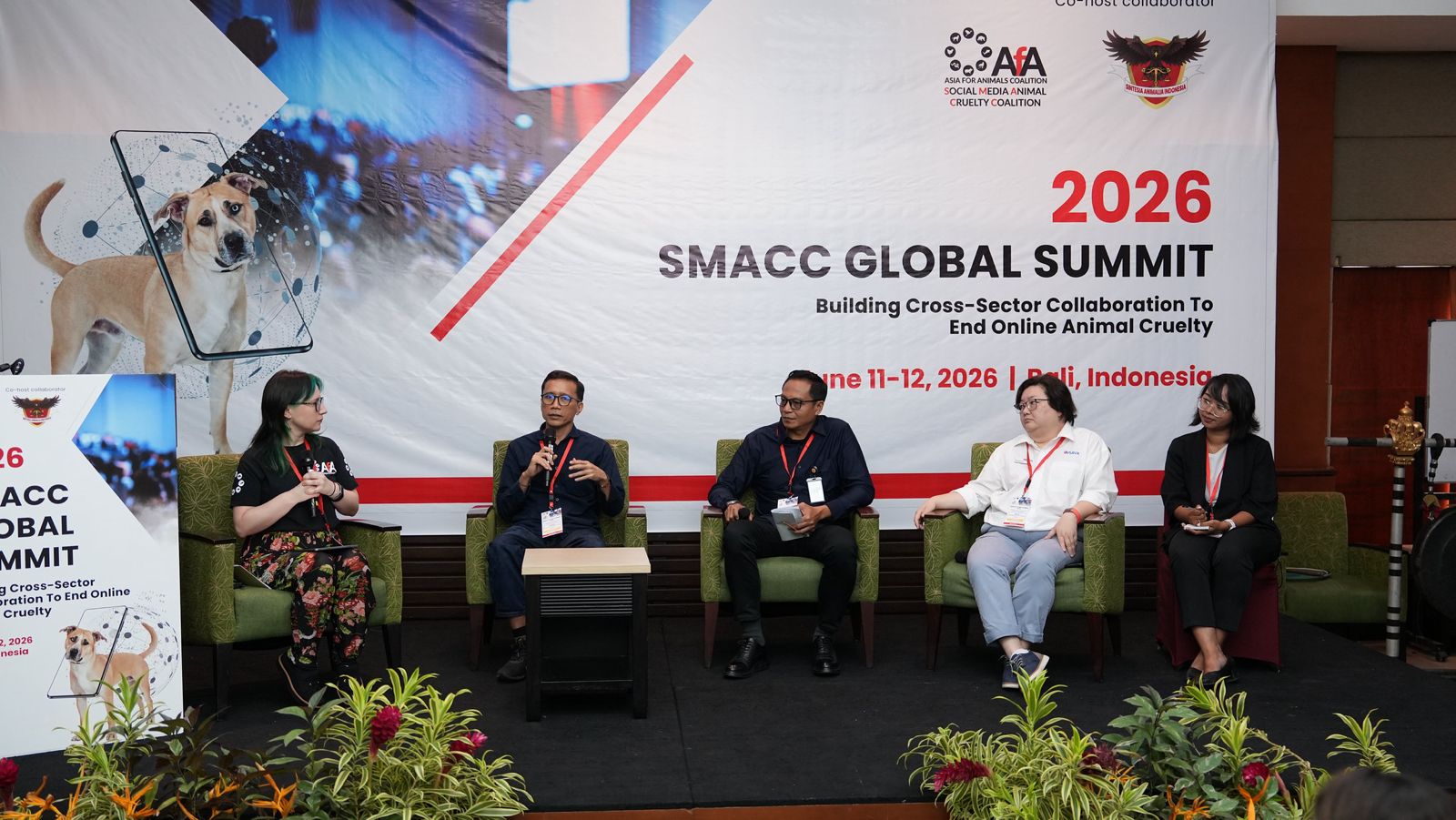
Held on 11–12 June 2026 at the Bali Rani Hotel in Kuta, Bali, the SMACC Global Summit 2026 brought together more than 130 participants from 30 countries across six continents, joining both in person and online. Participants included representatives from government, social media platforms, law enforcement, academia, veterinary bodies, media, digital safety, influencers, and animal protection organizations.
The Summit marked a significant step forward for an issue that animal protection organizations have been documenting for years, but which has still received limited coordinated attention globally. Online animal cruelty can cross borders, platforms, and legal jurisdictions, involving animals in one country, perpetrators in another, audiences across multiple regions, and technology systems that can amplify harmful content at speed.
Held under the theme “Building Cross-Sector Collaboration to End Online Animal Cruelty,” the Summit reflected growing recognition that no single organization, platform, sector, or country can address this issue alone.
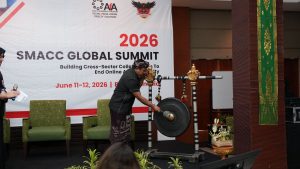
Representatives from the Indonesian Government, including the Ministry of Forestry, the Ministry of Agriculture, and the Ministry of Communication and Digital Affairs, joined international experts and civil society leaders across the two-day program. The event was formally opened by Dr Ketut Wica, S.Sos, M.H, Head of Bali Regional Research and Innovation, representing the Governor of Bali, I Wayan Koster.
Major social media platforms, including YouTube and TikTok, also took part in discussions on content moderation, policy implementation, platform governance, emerging risks, and opportunities for stronger collaboration with governments, researchers, and animal welfare organizations.
Danny Ardianto, YouTube Head of Government Affairs and Public Policy for South East Asia, spoke at the Summit to provide a platform perspective on the challenges of detecting and enforcing against animal cruelty content at scale.
“Collaboration and partnerships between governments, organizations, platforms like ours, experts, and others are critical for all of our safety efforts,” he said.
Ardianto added that “animal cruelty is also a focus area for YouTube” as part of the platform’s broader policies on graphic violence and illegal or regulated goods. While YouTube does not necessarily have a standalone policy specifically for animal abuse, he stated that “that doesn’t mean we don’t take it as a priority.”
He also highlighted YouTube’s work with SMACC on the harder-to-detect issue of psychological harm to animals, including efforts “to identify signals of psychological harm that can be incorporated into our moderation systems through AI” and to develop “proper playbooks and guidance” for human moderators.
Nicola O’Brien, Lead Coordinator of SMACC, said:
“This Summit was a landmark moment for the global response to online animal cruelty. This is an issue that animal protection organizations have been raising for years, but it has still received far too little coordinated attention worldwide. Bringing it onto a global stage, with governments, law enforcement, social media platforms, researchers, veterinarians, influencers, and animal protection organizations all in the same room, is a huge step forward.
“Online animal cruelty is not a niche animal welfare issue. It is a platform governance issue, a law enforcement issue, a regulatory issue, and a public safety and compassion issue. Platforms have a critical role because this is where the content is being created, shared, monetized, and amplified. Governments and regulators have a critical role in setting expectations and strengthening legal frameworks. Law enforcement has a critical role in investigating offenders and holding them accountable. And animal protection organizations bring the evidence, expertise, and urgency from the front line.
“The significance of this Summit is that these sectors are now beginning to recognize and engage with online animal cruelty as a serious global issue. That is new ground — and it creates real opportunities to build the collaboration needed to protect animals from cruelty online.”
Over the course of two days, the Summit examined emerging trends in harmful online content, wildlife exploitation, platform governance, digital investigation techniques, artificial intelligence, public engagement, and cross-sector cooperation. Sessions explored the growing sophistication of online animal cruelty networks, the role of algorithms in amplifying harmful content, links between online cruelty and wildlife trade, and the urgent need for stronger prevention, enforcement, and public awareness.
Drh Sasa Vernandes, Chief Veterinary Officer of Sintesia Animalia Indonesia, said:
“Hosting this summit in Indonesia provided an important opportunity to showcase the value of constructive dialogue and shared responsibility. The participation of government representatives, social media platforms, academics, and civil society organizations demonstrates growing momentum for collective action. We hope the relationships and commitments built here will translate into tangible improvements for animals affected by online cruelty worldwide. The conversations that began here must continue beyond Bali, and we hope this summit serves as the foundation for stronger international cooperation, research, and action in the years ahead.”
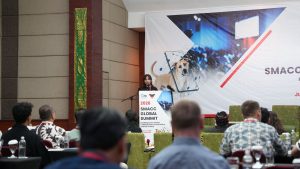
The role of veterinary professionals was also highlighted as central to the response. Speaking at the Summit, Dr Natasha Lee of the World Small Animal Veterinary Association (WSAVA) said:
“It’s important for us to highlight the role of vets in preventing more animal cruelty being published and spread online. We want vets to speak up about animal cruelty so that animals are protected, and vets can be leading advocates for animals.”
Ferry Agung Herlisetiawan, from the Ministry of Communication and Digital Affairs, said:
“SMACC Summit 2026 provided an important forum for collaboration between governments and civil society on the issue of animal cruelty in the digital space. Through this forum, we can better understand the evolution of harmful online content, its impact on children and other users, and the need to align regulation with the realities of implementation on the ground. We see real opportunities for future collaboration with SMACC, relevant ministries, and civil society partners to help make digital spaces safer, healthier, and more comfortable for everyone.”
Closing the event, I Dewa Nyoman Rai Dharmadi, Head of Bali Province Civil Service Police Unit, said:
“I hope that this international forum leads to real government action on animal welfare, on protecting endangered species, and above all, on stopping animal cruelty from spreading across social media.”
The SMACC Global Summit 2026 closed with a shared recognition that online animal cruelty is too complex, too borderless, and too embedded in digital systems for any one sector to tackle alone. As the first event of its kind, the Summit placed online animal cruelty firmly on the global digital safety agenda and created a foundation for stronger international cooperation between governments, platforms, researchers, law enforcement, veterinary professionals, and animal protection organizations.
For animals suffering because cruelty is created, shared, or amplified online, the Summit marks the beginning of a new phase: one focused not only on documenting the problem, but on building the partnerships, policies, and practical tools needed to stop it.